
 Everything I know is wrong, Fuel Filters Everything I know is wrong, Fuel Filters |
|
|

|
Porsche, and the Porsche crest are registered trademarks of Dr. Ing. h.c. F. Porsche AG.
This site is not affiliated with Porsche in any way. Its only purpose is to provide an online forum for car enthusiasts. All other trademarks are property of their respective owners. |
|
|
  |

| NARP74 |
 Jul 6 2026, 10:32 AM Jul 6 2026, 10:32 AM
Post
#1
|
|
Senior Member  Group: Members Posts: 1,451 Joined: 29-July 20 From: Colorado, USA, Earth Member No.: 24,549 Region Association: Rocky Mountains  |
Around the beginning of the year, there were a few threads about fuel filters. Do you need them, what size, location, the tank sock etc. I pondered the info. I decided to start my thread instead of hijacking theirs. I just waited too long to do it, better late than never.
Car 1, 74, 2.0 4 cylinder Purchased a pump filter combo from an online retailer. Many people sell the same one at various prices. In the notes it says, do not remove the filter or the warranty is void. Stock location, sock in the tank, should the filter be there before the pump or somewhere else or not at all? Car 2, 74 3.2 6 cylinder I was redoing the pump location and while the pump sat around dry it must have gone bad. Seals dried up or something maybe. When I put it back in and filled the tank, all the gas ran out of the pump. So i bought a new one, Bosch 580 464 200, but there are several numbers on the box. It is replacing an older Bosch pump. I am putting it under the steering rack and I decided to run a pre-filter. I have a new sock in the tank, then to a Earls 100 micron filter, then the pump, then through the lines to the engine. The engine has a stock Porsche fuel filter on it before the injectors. The problem I am having is that with all of the different connections and sizes and adapters and hose splices, I am having trouble fitting everything in line without hose kinks in a very tight space. There was one thought in those earlier threads that said you don't really need a filter before the pump and it would actually reduce performance of the pump. If that is correct, removing the filter before the pump on car 2 would solve all of my problems. But i don't want to add more by note having one. Maybe some of the other commenters from those older threads will chime in and set me straight on filters, size, location etc. Poor visualization skills are not an excuse to request pics! Haha |
   |

 
|
| Superhawk996 |
Jul 6 2026, 03:17 PM
Post
#2
|
|
914 Guru Group: Members Posts: 7,937 Joined: 25-August 18 From: Woods of N. Idaho Member No.: 22,428 Region Association: Galt's Gulch 
|
Look to modern OEM fuel systems that are engineered for performance & reliability.
The layout is: Tank pre-filter (100-300 micron) Pump Filter |
|
|
|
| Ninja |
Jul 6 2026, 04:16 PM
Post
#3
|
|
Member Group: Members Posts: 234 Joined: 25-September 25 From: Granbury Texas Member No.: 29,004 Region Association: Southwest Region |
The OEM world has eliminated the post pump fuel filter starting about 15 years ago.
The only thing they have is the pre-pump fuel sock now. About 35 years back we had a horrendous fuel contamination problem, and a bunch of new fuel storage/transfer laws went into effect. They appear to have been effective. Today's fuel is pretty clean (except for the ethanol content which DOES eliminate any water). On an old 914 I'd go clean tank, new strainer in tank, pump, then filter. Only reason for pre pump filter would be nasty tank in my book. I'd change that one two maybe three times a year and plan cleaning or replacing the tank soon. |
|
|
|
| NARP74 |
Jul 6 2026, 04:38 PM
Post
#4
|
|
Senior Member Group: Members Posts: 1,451 Joined: 29-July 20 From: Colorado, USA, Earth Member No.: 24,549 Region Association: Rocky Mountains |
I am most concerned with #2. The tank is clean. There was some small dry debris in the bottom when I drained it, gone now.
Haven't looked in #1 for a while, not injected, carbs, less concerned. I have seen it mentioned here but forgot and search might be futile, what is the equivalent filtering size of the in tank fuel sock? |
|
|
|
| Cairo94507 |
Jul 6 2026, 04:48 PM
Post
#5
|
|
Michael Group: Members Posts: 10,691 Joined: 1-November 08 From: Auburn, CA Member No.: 9,712 Region Association: Northern California
|
And here I thought this was about being married... (IMG:style_emoticons/default/beerchug.gif)
|
|
|
|
| NARP74 |
Jul 6 2026, 04:53 PM
Post
#6
|
|
Senior Member Group: Members Posts: 1,451 Joined: 29-July 20 From: Colorado, USA, Earth Member No.: 24,549 Region Association: Rocky Mountains |
QUOTE(Cairo94507 @ Jul 6 2026, 03:48 PM)  It could be... I am not anymore! |
|
|
|
| Jamie |
Jul 6 2026, 05:41 PM
Post
#7
|
|
Senior Member Group: Members Posts: 1,215 Joined: 13-October 04 From: Georgetown,KY Member No.: 2,939 Region Association: South East States
|
QUOTE(NARP74 @ Jul 6 2026, 02:38 PM) I am most concerned with #2. The tank is clean. There was some small dry debris in the bottom when I drained it, gone now. Haven't looked in #1 for a while, not injected, carbs, less concerned. I have seen it mentioned here but forgot and search might be futile, what is the equivalent filtering size of the in tank fuel sock? For practical reasons I suggest in tank sock filters are useless, I've damaged several while attempting inserting into the tank, whether in or out of the car. An inline filter before front mounted pump is accessible and easily replaced, and I also run a filter post pump to keep stuff out of my injectors. |
|
|
|
| ClayPerrine |
Jul 6 2026, 06:00 PM
Post
#8
|
|
Life's been good to me so far..... Group: Admin Posts: 16,566 Joined: 11-September 03 From: Hurst, TX. Member No.: 1,143 Region Association: NineFourteenerVille
|
I take one of these:
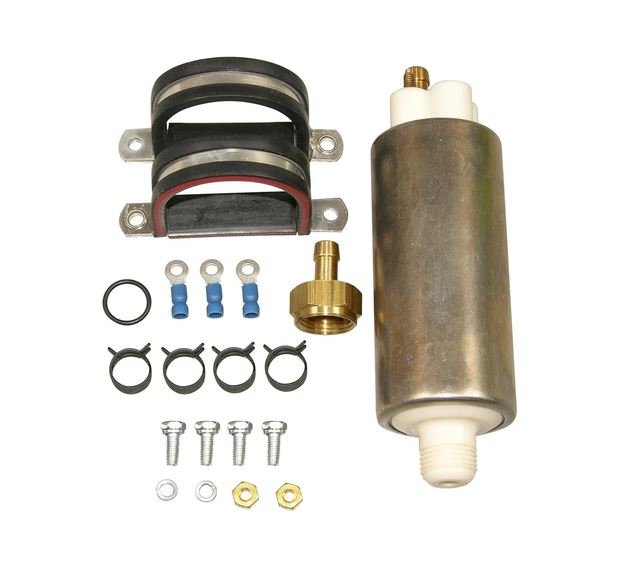 And alter the brass fitting on the suction side to fit one of these: 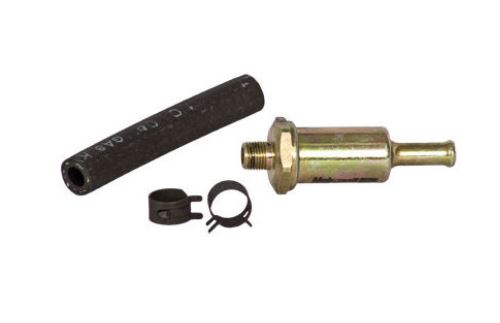 The filter is for a carbureted 70s Ford, and the hose barb on the end is the exact same size as the large line from the tank. So no adapter needed. In the engine compartment, I put in one of these. 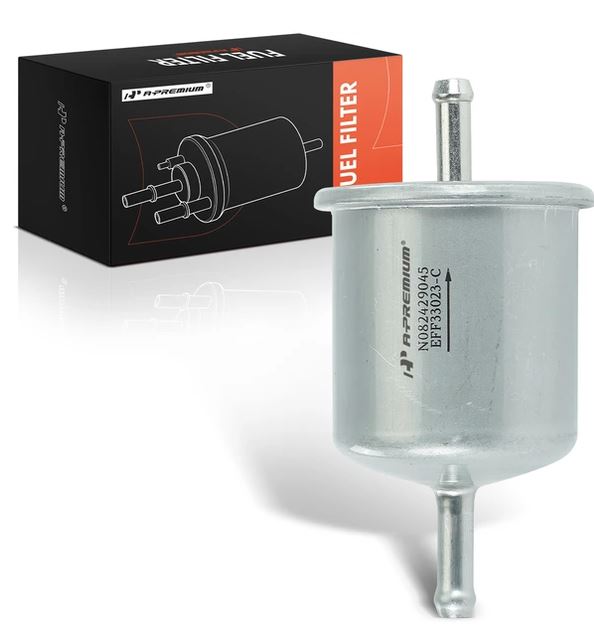 This is a Nissan high pressure fuel filter for fuel injected cars. It keeps the injectors nice and clean. |
|
|
|
| wonkipop |
Jul 6 2026, 06:31 PM
Post
#9
|
|
914 Guru Group: Members Posts: 5,583 Joined: 6-May 20 From: north antarctica Member No.: 24,231 Region Association: NineFourteenerVille
|
QUOTE(Jamie @ Jul 6 2026, 05:41 PM) QUOTE(NARP74 @ Jul 6 2026, 02:38 PM) I am most concerned with #2. The tank is clean. There was some small dry debris in the bottom when I drained it, gone now. Haven't looked in #1 for a while, not injected, carbs, less concerned. I have seen it mentioned here but forgot and search might be futile, what is the equivalent filtering size of the in tank fuel sock? For practical reasons I suggest in tank sock filters are useless, I've damaged several while attempting inserting into the tank, whether in or out of the car. An inline filter before front mounted pump is accessible and easily replaced, and I also run a filter post pump to keep stuff out of my injectors. thats the way i have set up too. (IMG:style_emoticons/default/beerchug.gif) except fuel pump is still in stock position. dinky VW cube filter before pump, high flow/high pressure filter after pump. injectors are getting harder to find so why not protect them. taking a look at what @ClayPerrine advises - same in principle with updated better components. ---- as an aside the original way the 914/4s were set up was pure early VW EFI practice. and as far as i know unique to VW. ie the tank up front and the EFI high pressure fuel pump remote at the rear near the engine with one of their dinky little standard cube filters on the feed (low pressure) side. it was like they mimicked their earlier carb set ups with the mech fuel pump on the engine. they were criticised for this back in the day as its a problematic set up - probably contributed to half their vapor lock problems and fuel starvation problems that all the VW air cooled EFI cars were known for - not just 914s. every manufacturer went the other way. high pressure fuel pump near tank and long length of pressurised run to engine and more often than not high pressure fuel filter after the pump. running fuel lines through the cabin in the central tunnel probably was the reason. everyone else just about ran the fuel lines under the car outside the cabin. not a great idea running fuel lines in the cabin and even worse under high pressure. i'm guessing the fuel lines being plastic were done that way to survive a collision without breaking open. so they kind of hog tied themselves to a long long length of gravity feed/weak suction feed to the fuel pump. which was not really a good way to go. even though they finally retreated from this with the 75 cars and the relocated fuel pump they were still running the fuel lines inside the cabin and this time it was under higher pressure. still not great. they finally changed all that when they went water cooled. |
|
|
|
| Superhawk996 |
Jul 6 2026, 07:45 PM
Post
#10
|
|
914 Guru Group: Members Posts: 7,937 Joined: 25-August 18 From: Woods of N. Idaho Member No.: 22,428 Region Association: Galt's Gulch
|
QUOTE(NARP74 @ Jul 6 2026, 06:38 PM) I have seen it mentioned here but forgot and search might be futile, what is the equivalent filtering size of the in tank fuel sock? I’ve never found a published spec. Based on appearance of the fine screen and what I’m familiar with, it’s somewhere around 100 micron. The in-tank sock is your pre-filter Also keep in mind: Gas stations filter to about 10-30 micron. Supposed to be closer to low end . . . But you know how real world works. That is why you run a 10 micron fuel injection filter after the pump - something like Clay has suggested. |
|
|
|
|
3 User(s) are reading this topic (2 Guests and 0 Anonymous Users)
1 Members: PlaysWithCars

|
Lo-Fi Version | Time is now: 7th July 2026 - 01:16 AM |
Invision Power Board
v9.1.4 © 2026 IPS, Inc.